
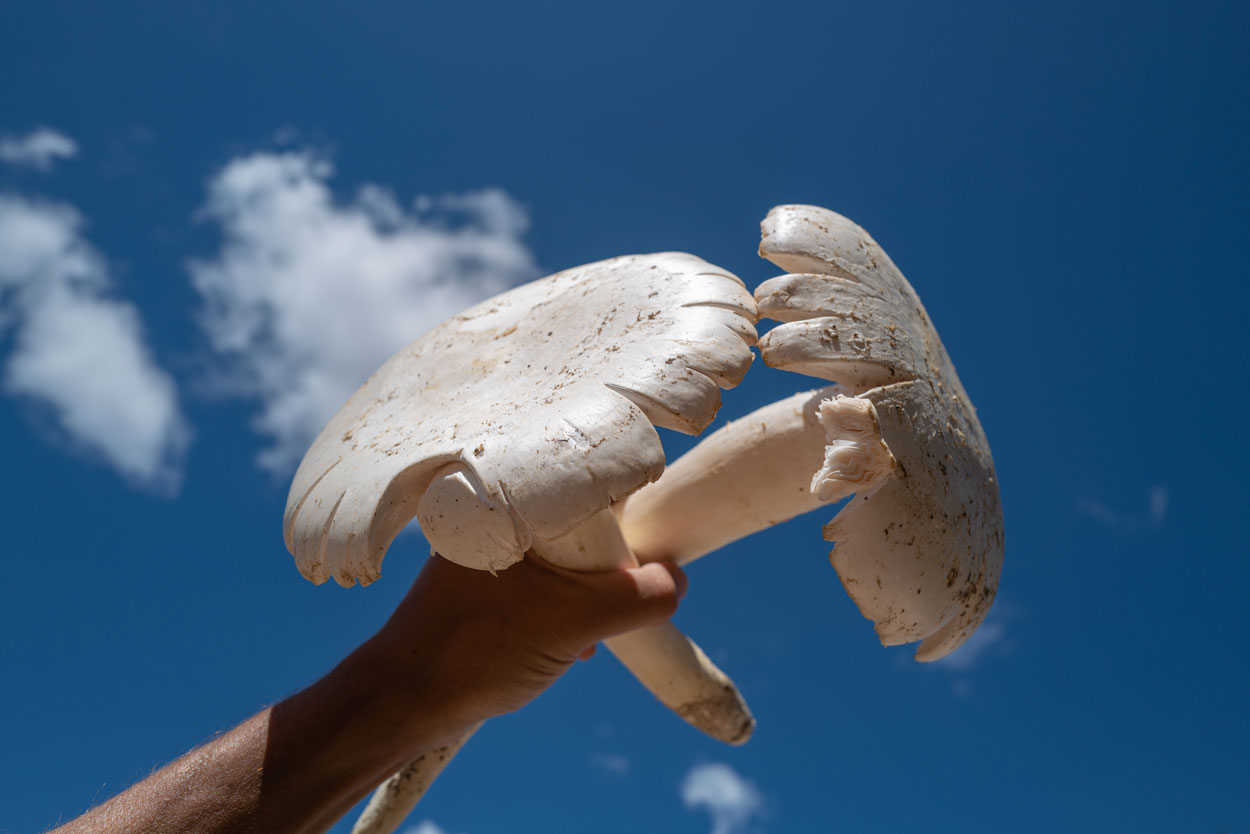
Omajowa (Termitomyces schimperi) are giant, delicious mushrooms you can find growing in Namibia.
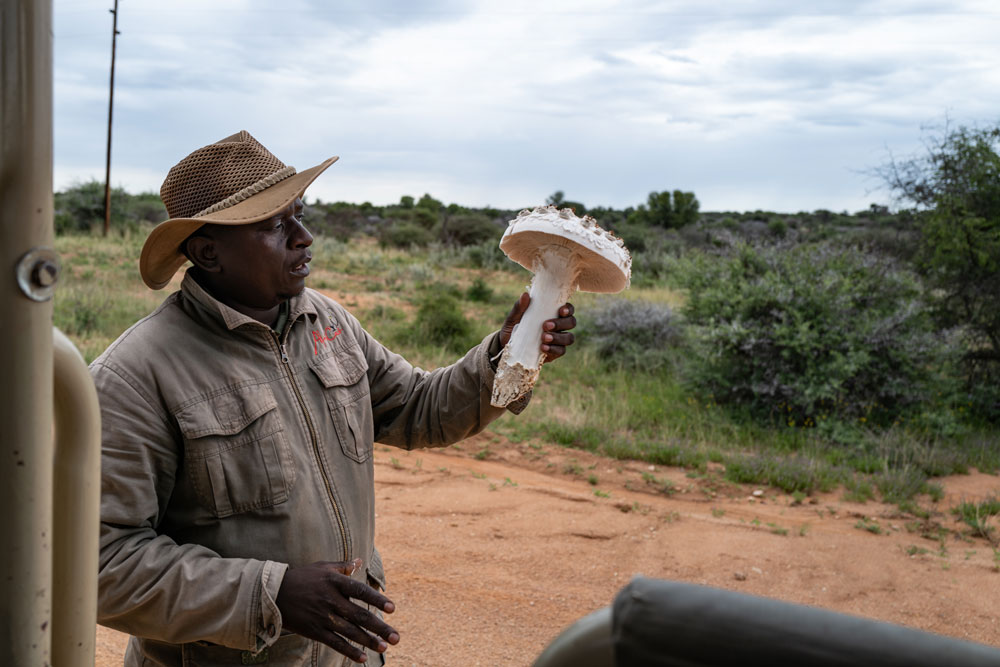
These things are ENORMOUS! They can reach up to 40cm in diameter and weigh as much as 2.5kg.
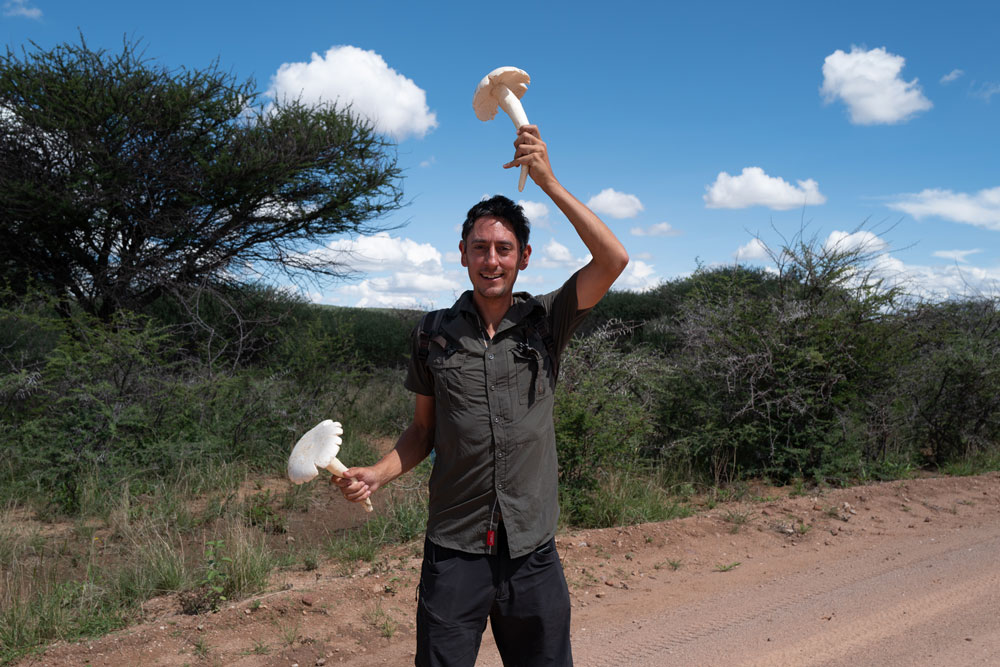
When we first saw some folks holding them up by the side of the road, we thought they were selling tiny umbrellas.
The Omajowa mushroom is seen as a great delicacy in Namibia.
We were out on a game drive when our guide spotted some. He slammed the brakes, squealed with joy, and raced out of the car to harvest some. They are that good!
And they have symbolic meaning too.
Because you only find these unique mushrooms during the rainy season, they are seen as a celebration of fertility, growth, and prosperity. They are an all-around feel-good mushroom.
Getting hold of these really was one of the culinary highlights of our trip to Namibia.
If you get the chance, definitely try them.
We never found them on menus at restaurants or lodges (surprisingly), so you’ll need to follow the tips below if you want to get your hands on these mycological monsters.
What do they taste like?
Cooked they taste woody and sweet and buttery. They have a lovely, firmish texture to them, similar to oyster mushrooms, but softer and more velvety.
Raw (yes, you can eat them raw!) they taste sweet and buttery and with an almost radish, salad like tinge to them.
The meat from one of these (can you call mushroom flesh meat?) would easily fill up a large punnet of the kind of normie mushrooms you’d find in the supermarket back home.
We found that 1 mushroom per person was the perfect portion and made a really generous side dish.
Where to find omajowa mushrooms
Omajowa mushrooms typically grow between January and March, which is the rainy season in Namibia.
Location-wise they can be found in the middle and north of the country.
So basically most places north of Windhoek, the capital, and also stretching across the Caprivi Strip.
If you’re lucky enough to be in this beautiful country at the right time get stuck in! They are an absolute treat.
Here’s how you can get your hands on them:
Option 1: Buy them by the side of the road
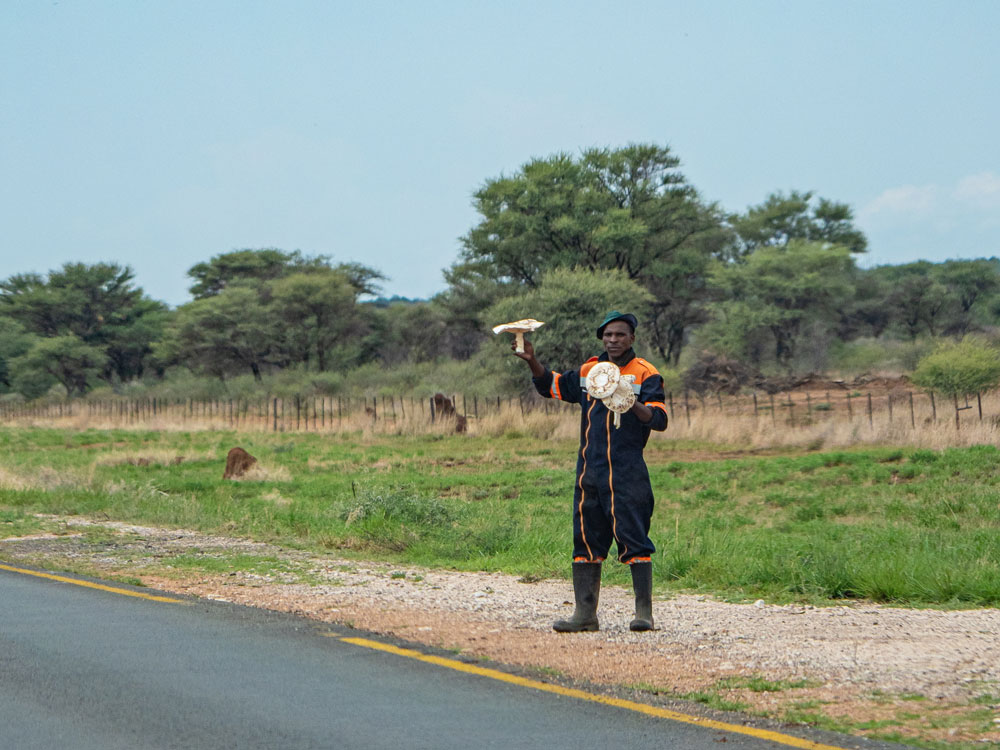
The best place to find omajowa mushrooms is by the side of the road.
When you’re driving you’ll see enterprising Namibians waving them at you (usually above their heads) as you drive by. There are relatively few roads in Namibia and if you are driving any kind of distance (50km +) you are likely to encounter sellers if it’s the right time of year.
To give you an idea, on a 200km we would typically come across 3 different sellers. Sometimes it would be one person on their own, other times a little group.
All you have to do is slow down to a stop, choose how many you want to buy and agree a price.
As a very rough guide we paid around NAM $20 – 25 per mushroom. I have absolutely no idea if this was a fixed price or a tourist price but they didn’t seem up for haggling and we felt that this was good value.
Option 2: Forage them from termite mounds
If you’ve got a keen eye you can actually spot omajowa mushrooms sprouting from the sides of some termite mounds.
Unfortunately they don’t grow on every termite mound – we had no luck finding them unaided and there are termite mounds everywhere in Namibia – so you’ll need time and patience for this.
Important: to pick an omajowa, snap it near the bottom rather than pulling it out. Otherwise it will damage the termite mound and pierce a hole in it. Leaving the base of the stem in will also help ensure it can grow the following year.
How to cook omajowa mushrooms
You can cook omajowa just like you would any mushroom.
Step 1:
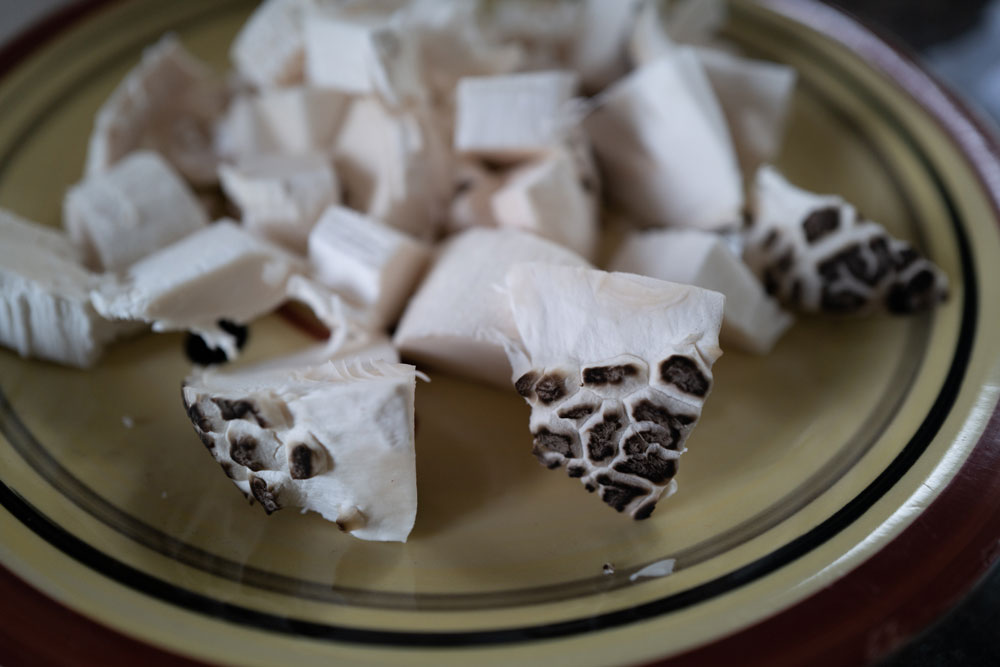
First chop them up into small pieces.
You can use all of the mushroom, including the stems.
(You’re not going to want to waste any of this!)
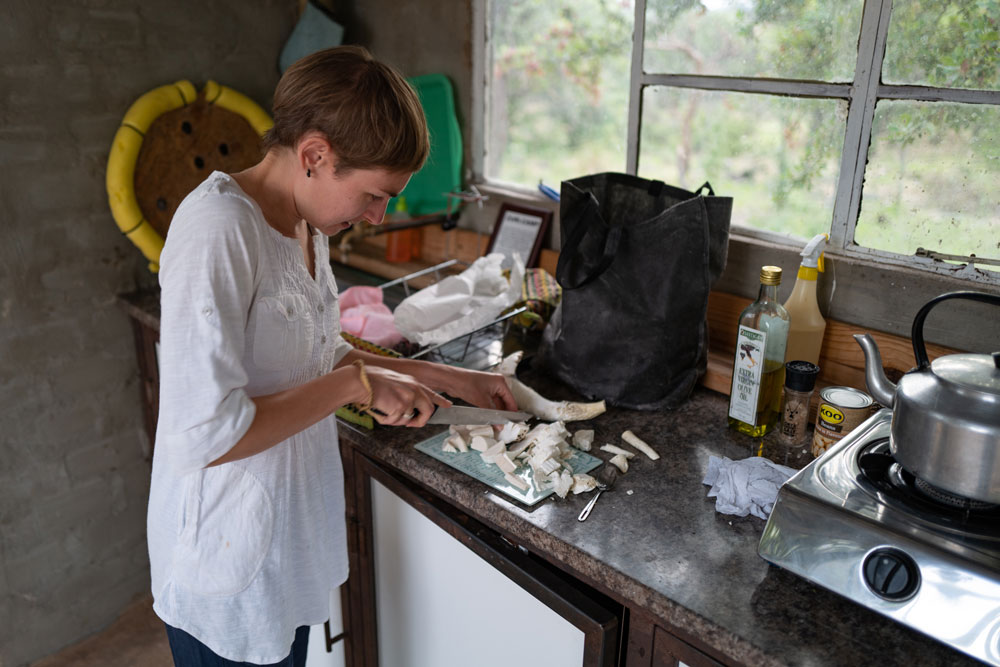
Don’t worry too much about how big or small the pieces are. Remember, they’ll shrink down in the pan when cooking because mushrooms contain a lot of water.
Step 2:
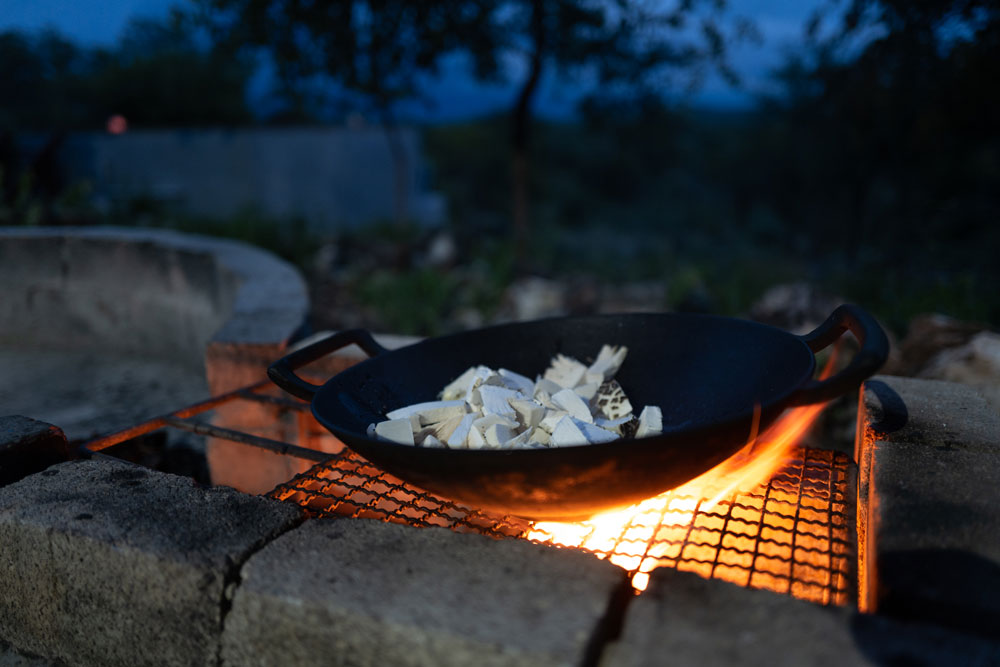
Chuck them in a frying pan with some butter (or olive oil), sprinkle them with salt and cook for a few minutes.
It’s hard to give exact timings (we were cooking over a wood fire) but you’ll start seeing them browning nicely.
That’s it!
They are the perfect accompaniment to any braai and, in my opinion, get an extra kick from being wood smoked.
To be honest everything tastes amazing wood smoked. I reckon you could wood smoke my socks and they’d taste amazing.
If you don’t fancy camping, or don’t have access to cooking facilities, don’t worry.
Take you stash of omajowa with you to your lodge or guest house and ask the chef if they can prepare for you with your dinner.
We did this towards the end of our trip when we were treating ourselves to a stay in a lodge.
The chef was only too happy to help and served it up as a side dish with our mains at dinner.
Interesting facts about omajowa
I’m a little obsessed with mushrooms and the weird and wonderful world of mycelial networks.
With that in mind I can’t resist geeking out and adding some more info about these amazing mushrooms.
Omajowa mushrooms’ latin name is termitomyces schimperi.
If you’ve been reading this article all the way through you’ll have noticed that they are often found growing at the base of termite mounds.
This is an important detail.
That’s because they’ve formed a symbiotic relationship with a certain species of termites (macrotermes michaelseni).
The termite mound offers the perfect environment for the fungus (termitomyces) to thrive. The fungus feeds off waste matter from the termites and as it grows converts cellulose into simple sugars which the termites can more easily digest.
It’s a win for both the termites and the fungus and the bromance repeats year after year during the rainy season.
That fruiting body you can see is the enormous, mind blowingly delicious omajowa mushroom.
What do you think of omajowa mushrooms? Please let me know in the comments below!





0 Comments